
Success Psychology · Lesson 3
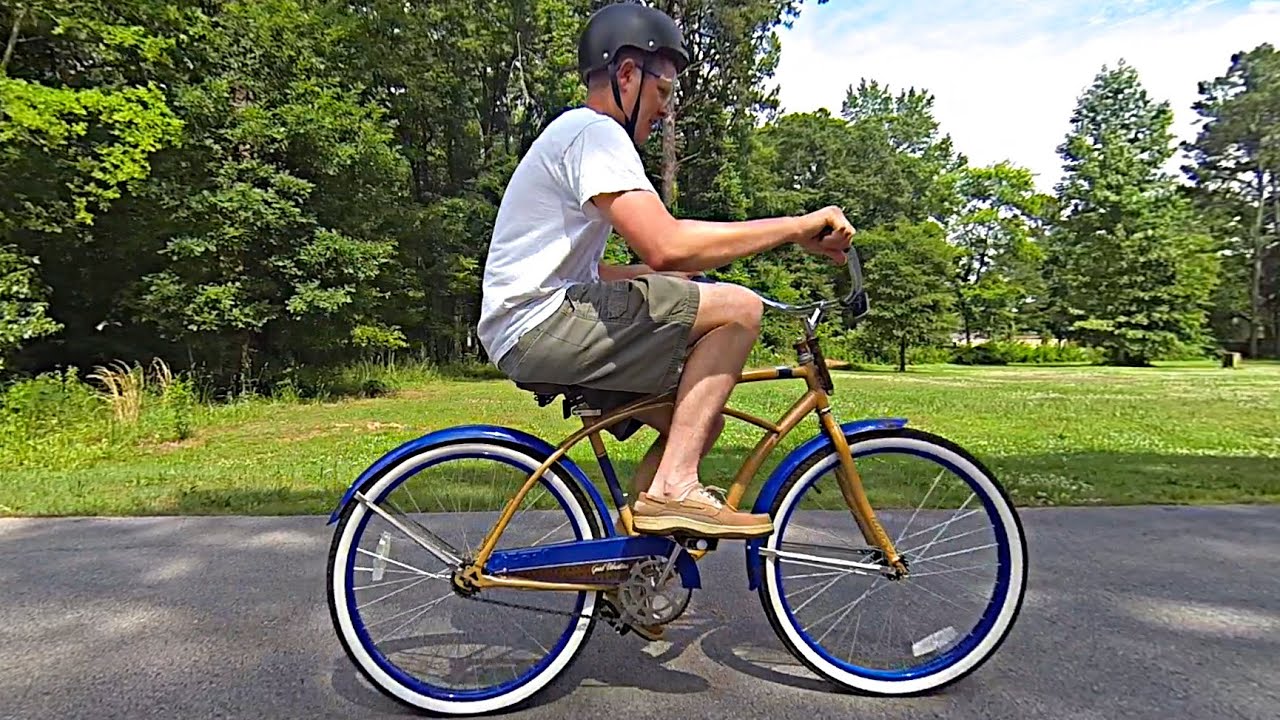
A welder builds a bicycle with one change: turn the bars left and the wheel goes right. An engineer who has ridden bikes since he was six gets on, certain he’ll manage it, and falls off. So does everyone else, for two hundred dollars, in front of a crowd. It takes him eight months of five minutes a day to learn it. His six-year-old learns it in two weeks. Then, in Amsterdam, he gets on a normal bike and can’t ride that one either. Twenty minutes later something clicks and he’s back, and nobody standing around him believes any of it happened.
That’s the whole video, and it’s the best eight minutes on hidden bias I’ve ever seen, because it never uses the word. It just shows you what one looks like from the inside. Here’s what Destin demonstrates, dynamic by dynamic, and what each one looks like on a trading chart.
1. Knowledge is not understanding
Destin knew exactly how the bike worked. He could have drawn you the linkage. He still couldn’t ride it, and his line for it is the one I’d put on every trader’s monitor: he had the knowledge of how to operate the bike, but not the understanding.
Every trader who has read the VWAP Wave System book has the knowledge. They can list the four setups and explain acceptance and rejection. Then the open happens, price stretches to the second band on a trend day, and they short it, because knowing that bands aren’t support and resistance is not the same as being unable to short one. Understanding is what your hands do when there’s no time to think. The book is the linkage diagram. The driveway is the Inner Circle homework, the simulator drills, and a few hundred sessions of naming the condition out loud.
2. Change one input and the whole algorithm fails
Destin’s point about why he couldn’t just power through: riding a bike is a control system with a dozen coupled inputs, pedal force, lean, steering, gyroscopic effects, and reversing one of them breaks all of them. You don’t ride a backwards bike badly. You don’t ride it at all.
You arrive at the VWAP Wave System with a control system already installed. Twenty-five years of one, in my case. Buy strength, sell weakness, chase the breakout, fade the spike. The system reverses one input: read the condition before you pick the setup. That one change makes the whole old algorithm wrong, and the first months feel exactly like Destin’s first attempt, laughing on the outside and frustrated underneath. If you expect to ride the new bike badly for a while, you’ll quit. Expect to fall off completely, and stay in the driveway.
3. Rigid thinking, and the two-hundred-dollar test
Nobody on that stage could ride the bike ten feet, and everybody thought they could. Destin’s explanation: once you have a rigid way of thinking, sometimes you can’t change it even when you want to. The crowd watched confident people try tricks and brute force, and every one of them went down.
The two-hundred-dollar rider is the trader who believes willpower is a strategy. He’ll stop overtrading by trying harder. He’ll stop fading trend days by being more careful. He has never once managed it, and he’s sure he will today. The system doesn’t ask you to try harder. It gives you a checklist, a grade, and a daily stop, because it assumes your old algorithm will grab the handlebars the moment you stop paying attention. Which brings us to the scary part.
4. The new path is real, and it’s fragile
After eight months, one day Destin couldn’t and the next day he could. His description of what it felt like afterwards is the most useful sentence in the video for a trader: the new pathway was there, but if he wasn’t paying close attention his brain would slide back onto the old road, and any small distraction, a phone ringing in his pocket, would throw him straight back to the old control algorithm. And he’d wreck.
A losing trade is a phone ringing in your pocket. So is a headline, a Discord ping, a fast tape, or the third strike of the morning. The new process is a trail through the woods; the old habits are a paved road. Under stress the brain takes the road.
This is the real reason for the rules that look excessive from outside. The daily stop that closes the platform. The three-strikes rule. The small group on voice who hear you name the setup before you take it. None of that is about discipline in the moral sense. It’s about not letting the phone ring while you’re on the trail. My journal’s execution column is a record of every time the old road took over, and the pattern is always the same: a distraction first, then the wreck.
5. The kid learns in two weeks
Destin’s son, who had ridden a normal bike for half his life, learned the backwards one in two weeks. Neural plasticity, in the video’s words: a child’s brain is more plastic than an adult’s.
In my small group, the newest trader learns the system faster than I did, and I’m the one with twenty-five years. Not because they’re smarter. Because they have less to unlearn. If you’re a veteran arriving at this system, the honest expectation is that you’re Destin, not the kid: eight months, not two weeks, and the unlearning is the work. Be humble about it. The beginner who takes the system straight may be riding before you are.
6. You don’t remove a bias. You re-designate it
This is the part most people miss. In Amsterdam, Destin gets on a normal bike and can’t ride it. He’d set out to prove he could free his brain from a bias, and concludes that all he’d really proved was that he could re-designate it. He hadn’t become unbiased. He’d become biased the other way.
Trade the system long enough and you become a VWAP Wave trader, which is a bias. A good one, tested and structured, but a bias, and there will be days when the map is wrong: a regime shift, a data-driven day, a session where the bands mean nothing because the whole world is repricing at once. The trader who thinks the system made him objective gets hurt on those days. The trader who knows the system is his current bias, deliberately chosen, notices sooner. That’s what the condition check in Lesson 4 of the course is for. It’s the twenty minutes in Amsterdam, done on purpose, before the session.
7. Nobody believed him
When Destin’s brain clicked back, the people around him thought he’d faked the whole thing, because everyone knows you can’t forget how to ride a bike. He couldn’t articulate what had happened to anyone.
Your process change is invisible from outside. Your P&L doesn’t show that you passed on nine trades this week that weren’t setups; it only shows the one B trade you took. Family, friends, and other traders will see the flat month and not the rebuilt control system underneath it. That’s why the witnesses matter: a mentor who reads the journal, a group who heard you name the condition, an execution column that records what the equity curve can’t. Without them, the unlearning happens alone, and alone is where it gets abandoned.
8. Truth is truth, no matter what you think about it
Destin’s closing lesson, and the one that names the whole thing: he learned that truth is truth no matter what he thought about it, and that you’re looking at the world with a bias whether you think you are or not.
The chart is the truth. Price either accepts outside value or it doesn’t. The market is either in discovery or it’s balanced. Your bias is the lens you’re looking through, and a hidden bias is the one you can’t see because you’re looking through it, not at it. I wrote about those blind spots in an earlier lesson; this video is what one feels like when it’s yours.
Your own backwards bicycle
You can’t see your hidden bias by introspecting. Destin didn’t discover his by thinking harder; he discovered it by getting on a bike that punished it. Here’s how I find mine:
- The two-hundred-dollar test. Find the trade you’re most sure about today, the one you’d bet a stranger’s money on. Grade it honestly. If you can’t name the condition and two independent confluences, that certainty is the bias talking, and passing on it is riding ten feet.
- Read the execution column for clusters. Crosses in the journal that bunch around the same hour, setup, or mood are the old road showing through the trail. Mine cluster after losses. Yours might cluster after wins.
- Drill in the simulator with a reversed rule. A session where you’re only allowed to take fades, then one where you’re only allowed continuation. The one that feels impossible is the one your algorithm is rigid about.
- Name the condition out loud. Every day, before the first setup. It’s the equivalent of Destin’s five minutes in the driveway, and it’s the only reason I can feel the old road pulling before I’m on it.
- Decide what counts as a ringing phone. Write down the specific things that throw you back: a loss of a certain size, a headline, a fast open. Then write down what you do when one happens. Mine is a closed platform and a voice channel.
Eight months of five minutes a day. That’s the price of a new control system, and it’s cheaper than the alternative, which is riding the old bike into the same wall forever while insisting you know how to ride.
Watch the video again in a month. It gets better once you’ve fallen off a few times yourself.
Disclosure. VWAP.biz is an independent site written by Scott West, a paying member of Drysdale Trading Group. The VWAP Wave System™ is Chris Drysdale’s work, and this site is not affiliated with or endorsed by him. Links to his book, toolkit, and community are affiliate links: if you buy through them I may earn a commission at no extra cost to you. Nothing here is financial advice, and trading futures carries a risk of loss. Full disclosure · Risk disclaimer
Ready for the system itself, not just my lessons on it?
I explain the VWAP Wave System from a student’s chair. Chris Drysdale teaches it. Start with his free Core Setup Guide, read the book, or take seven days inside Drysdale Trading Group and watch it traded live.